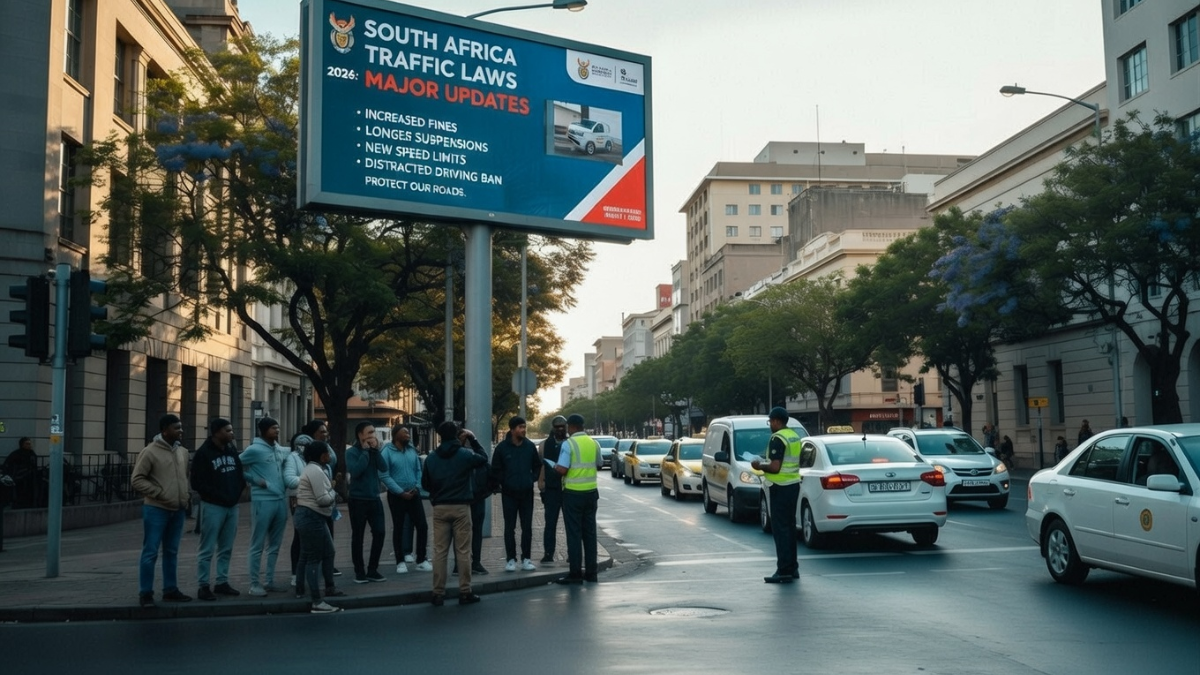
South African motorists are facing major changes in 2026 as updated traffic laws introduce stricter enforcement, higher fines, and faster licence suspensions. The reforms are aimed at reducing road fatalities, improving driver behaviour, and strengthening accountability on the country’s roads. For everyday drivers, these changes could significantly affect how violations are penalized and how quickly consequences take effect.
Why South Africa Is Updating Traffic Laws
Road safety remains a serious concern in South Africa, with high accident and fatality rates compared to global averages. Authorities have long emphasized the need for stronger deterrents to curb reckless driving, speeding, and repeat offences.
The 2026 updates are designed to modernize enforcement systems, close loopholes in existing regulations, and ensure penalties reflect the severity of violations. The focus is shifting from reactive punishment to consistent, preventive enforcement.
Who Is Implementing the 2026 Traffic Law Changes
The reforms are being rolled out under the oversight of the Road Traffic Management Corporation, working in coordination with provincial traffic departments. These updates align with national road safety strategies and the broader goal of reducing road deaths and serious injuries.
Authorities have indicated that technology and data-driven enforcement will play a larger role going forward.
Higher Traffic Fines Across Multiple Violations
One of the most noticeable changes in 2026 is the increase in fines for common traffic offences. Speeding, reckless driving, and failure to comply with road signs are expected to carry higher penalties than before.
The intention is to make fines meaningful deterrents rather than minor inconveniences. Repeat offenders may face progressively higher penalties within shorter timeframes.
Faster Licence Suspensions and Demerit Consequences
Licence suspension rules are also being tightened. Drivers who accumulate violations more quickly may face suspension earlier than under previous systems.
The revised framework emphasizes faster consequences for dangerous behaviour, reducing the delay between repeated offences and enforcement action. This change targets habitual offenders who previously benefited from slow administrative processes.
Expanded Use of Traffic Cameras and Digital Enforcement
South Africa is increasing its reliance on automated enforcement tools, including speed cameras and digital monitoring systems. These tools improve accuracy, reduce manual enforcement gaps, and ensure consistent application of the law.
With wider camera coverage, drivers can expect fewer warning-based interactions and more evidence-backed penalties issued through official channels.
Stricter Rules for High-Risk Driving Behaviour
High-risk behaviours such as excessive speeding, driving under the influence, and ignoring traffic signals are being addressed more aggressively in the 2026 updates. Penalties for these violations may include heavier fines, immediate suspensions, or additional legal consequences.
This reflects a zero-tolerance approach to actions that significantly increase the risk of serious accidents.
What Drivers Need to Be Most Aware Of
The updated laws affect daily driving more than many motorists realize.
- Increased fines for common violations, quicker licence suspensions for repeat offences, expanded use of traffic cameras, stricter penalties for high-risk driving, and faster enforcement timelines.
Understanding these areas can help drivers avoid costly mistakes.
How These Changes Affect Everyday Motorists
For compliant drivers, the changes mainly serve as a reminder to maintain safe habits. For those with frequent violations, the impact could be immediate and serious.
The new system leaves less room for repeated errors, meaning drivers must be more proactive about following traffic rules to protect their licences and finances.
Conclusion
The 2026 South Africa traffic law updates represent a firm shift toward stricter enforcement, higher fines, and faster penalties. By focusing on deterrence and accountability, authorities aim to create safer roads and reduce preventable accidents. For motorists, staying informed and adapting driving behaviour is the best way to avoid fines, suspensions, and long-term consequences.
Disclaimer: This article is for informational purposes only. Traffic laws, fine amounts, and enforcement procedures may vary by province and are subject to official government updates.